SUBSCRIBE

RECIPES

Almond
Pastry Rings

Egg Replacer in Baking: What It Is, What It’s Made Of and How to Use It

Egg Replacer in Baking: What It Is, What It’s Made Of and How to Use It

Egg replacer is a baking powder-style ingredient designed to help replace eggs in baked goods, not in cooking. To replace one egg, mix 1 teaspoon of egg replacer with 2 tablespoons of water, then whisk until smooth.

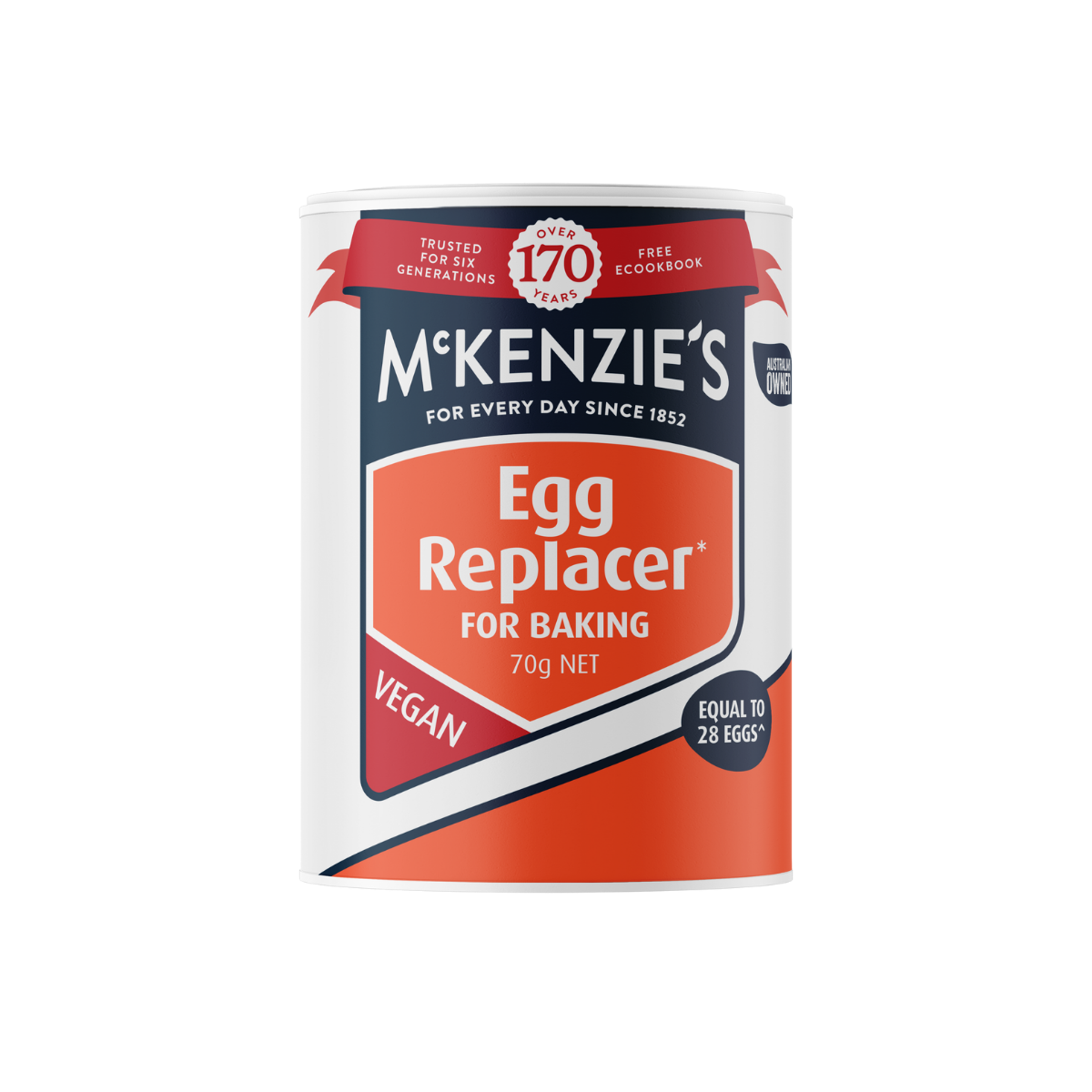
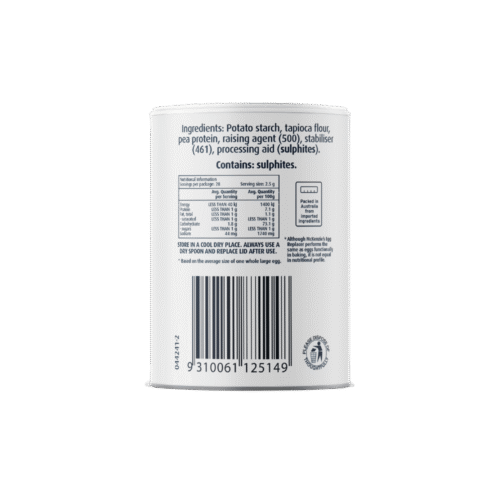
McKenzie’s Egg Replacer is made from potato starch, tapioca flour, pea protein, raising agent, stabiliser and a processing aid containing sulphites. It is designed for baking only, helping egg-free cakes, muffins, biscuits, pancakes and slices achieve a similar texture to recipes made with eggs.
How Much Egg Replacer Equals One Egg?

Use this simple ratio:

1 egg = 1 teaspoon egg replacer + 2 tablespoons water

Whisk the egg replacer and water together for around 20 seconds, then add the mixture to the other liquid ingredients in your recipe before combining with the dry ingredients.

Egg Replacer Conversion Table

Number of Eggs Egg Replacer Water
1 egg 1 tsp 2 tbs
2 eggs 2 tsp 4 tbs
3 eggs 3 tsp 6 tbs
4 eggs 4 tsp 8 tbs
5 eggs 5 tsp 10 tbs
6 eggs 6 tsp 12 tbs

For best results, use egg replacer in recipes where eggs are supporting the bake, not where eggs are the main ingredient.

What Is Egg Replacer Made Of?

Egg replacer is usually made from a blend of starches, raising agents and stabilisers.

McKenzie’s Egg Replacer contains potato starch, tapioca flour, pea protein, raising agent, stabiliser and a processing aid containing sulphites. Together, these ingredients help mimic some of the roles eggs play in baking, including binding, structure, moisture and rise.

It is not the same as powdered egg. Egg replacer does not contain egg and is not designed to taste, cook or behave like a whole egg on its own.

How Egg Replacer Works in Baking

Eggs do several jobs in baking. They help bind ingredients, add moisture, support structure and contribute to rise.

Egg replacer is designed to help with those baking functions. It can help hold a cake, muffin or biscuit mixture together and support a softer, more familiar texture.

However, it does not work exactly like a real egg. It does not provide the same richness, flavour, colour or protein structure. This is why it works best in recipes where eggs are part of the structure, rather than the hero ingredient.

Egg Replacer Is for Baking Only

Egg replacer is made for baking, not cooking.

It works well in:

  • Cakes
  • Muffins
  • Cupcakes
  • Pancakes
  • Biscuits
  • Cookies
  • Slices
  • Brownies
  • Some quick breads

It does not work in:

  • Scrambled eggs
  • Fried eggs
  • Omelette
  • Frittatas
  • Quiche fillings where egg is the main structure
  • Custards where egg provides the set
  • Meringues
  • Egg washes

A helpful rule: if the recipe is mostly egg, egg replacer is not the right substitute. If the egg is there to help a bake hold together, rise or stay moist, egg replacer is more likely to work well.

Which Baking Recipes Work Best With Egg Replacer?

Egg replacer works best in recipes that use one or two eggs and have other ingredients helping with structure, such as flour, baking powder, bi-carb soda, fruit, cocoa or nut meal.

Good recipes to try include chocolate cake, vanilla cake, muffins, banana bread, pancakes, brownies, biscuits and simple slices.

It is less reliable in recipes that depend heavily on eggs for lift or structure, such as sponge cakes, soufflés, meringues, pavlova, custard tarts or egg-heavy cheesecakes.

Egg Replacer vs Flax Egg vs Chia Egg

Egg replacer, flax eggs and chia eggs can all be used in egg-free baking,

but they behave differently.

Substitute What It’s Made From Best Uses Texture
Egg replacer Starches, raising agents

and stabilisers

Cakes, muffins, biscuits,

pancakes and slices

Light, neutral

and smooth

Flax egg Ground flaxseed and

water

Dense muffins, loaves,

brownies and rustic bakes

Slightly nutty

and textured

Chia egg Chia seeds and

water

Dense bakes, slices

and seeded recipes

Gel-like with

visible seeds

Egg replacer is the more neutral option when you do not want to change the flavour

or appearance of a bake. Flax and chia eggs can be useful, but they add more texture

and a mild seed flavour.

A Simple Baking Rule

Egg replacer is there to help your bakes hold together, rise and stay soft when you are baking without eggs. Use 1 teaspoon egg replacer with 2 tablespoons water for each egg, and keep it to recipes where eggs support the bake rather than lead it.

Can You Use Egg Replacer in All Recipes?

No. Egg replacer is not suitable for all recipes.

It is made for baking, where it can help support texture, moisture, binding and rise. It is not designed for cooking eggs on their own or replacing eggs in dishes where eggs are the main ingredient.

For best results, start with recipes already designed for egg replacer or egg-free baking.

FAQs

One egg equals 1 teaspoon of egg replacer mixed with 2 tablespoons of water. Whisk the mixture for around 20 seconds before adding it to your recipe.

Egg replacer is usually made from starches, raising agents and stabilisers. McKenzie’s Egg Replacer contains potato starch, tapioca flour, pea protein, raising agent, stabiliser and a processing aid containing sulphites.

Yes, McKenzie’s Egg Replacer is labelled vegan. It is designed to help create egg-free baked goods with a similar texture.

No, egg replacer does not work exactly the same as eggs. It helps with binding, structure, moisture and rising, but it does not provide the same flavour, richness, colour or protein structure as a real egg.

No. Egg replacer is best used in baking recipes such as cakes, muffins, pancakes, biscuits, brownies and slices. It is not suitable for recipes where eggs are the main ingredient.

McKenzie’s Egg Replacer is not currently listed by McKenzie’s among the products it makes a gluten-free front-of-pack claim on. Always check the current packaging for allergen and gluten information before using it in gluten-free baking.

Egg replacer is a powder made from starches, raising agents and stabilisers, while a flax egg is made from ground flaxseed and water. Egg replacer is more neutral and smooth, while flax egg adds a mild nutty flavour and more texture.

No. Egg replacer cannot be used for scrambled eggs. It is designed for baking only and will not cook like a real egg in a pan.

Egg replacer is not designed for general cooking. It is a baking-only product used to help replace eggs in cakes, muffins, pancakes, biscuits, brownies and slices.

Do not use egg replacer for scrambled eggs, fried eggs, omelettes, frittatas, pavlova, meringue or egg-heavy custards. It is not a direct replacement for eggs outside of baking.

Find us on social media