SUBSCRIBE

RECIPES

Almond
Pastry Rings

How to Use Gelatine Powder: A Complete Guide for Australian Cooks

How to Use Gelatine Powder: A Complete Guide for Australian Cooks

To use gelatine powder correctly, sprinkle it over cold water first, let it bloom, then gently dissolve it before mixing it into your recipe.

That is the simple rule. Do not add gelatine powder straight into hot liquid, as it can clump. Give it time to absorb cold water first, then dissolve it gently so it blends smoothly into jellies, panna cotta, cheesecake slices, mousses, terrines, glazes and other sweet or savoury dishes.

McKenzie’s Gelatine Powder is a platinum strength setting agent that helps turn liquids into gel. As a guide, 2 teaspoons of McKenzie’s Gelatine Powder will set approximately 500ml of liquid.
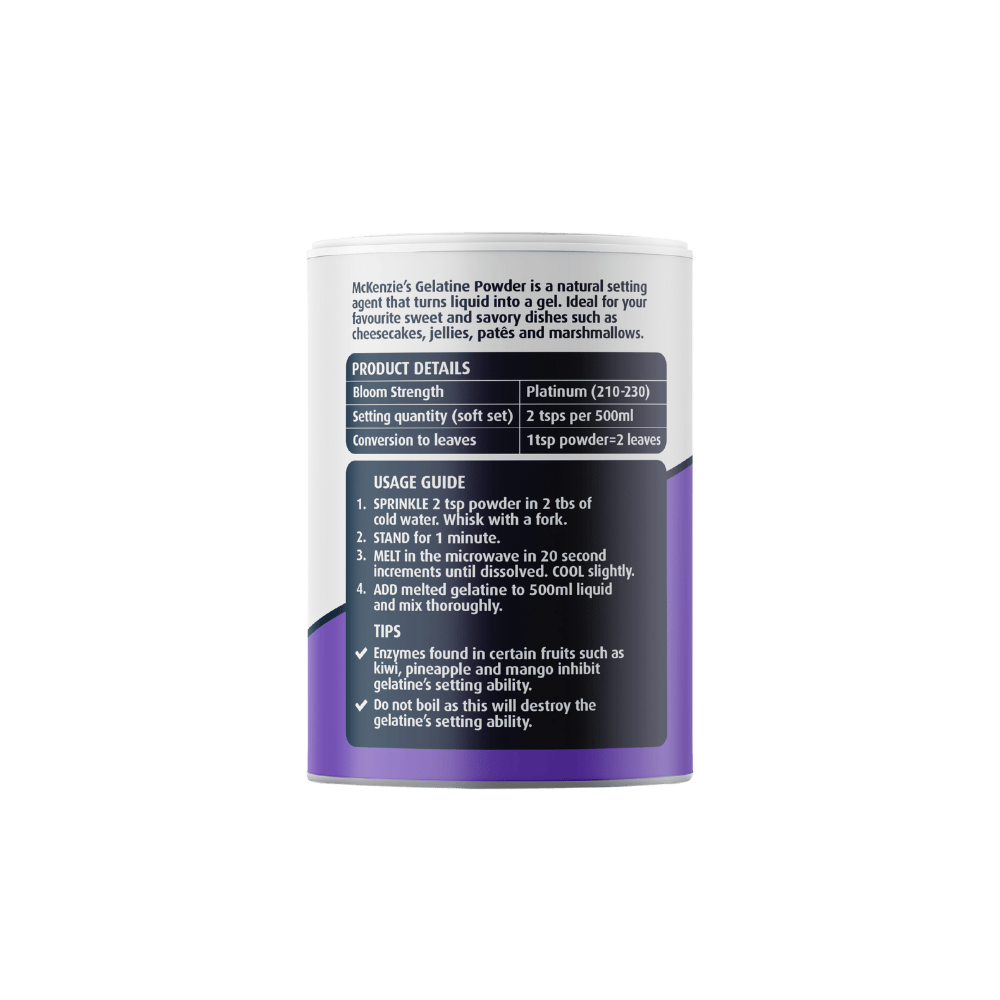
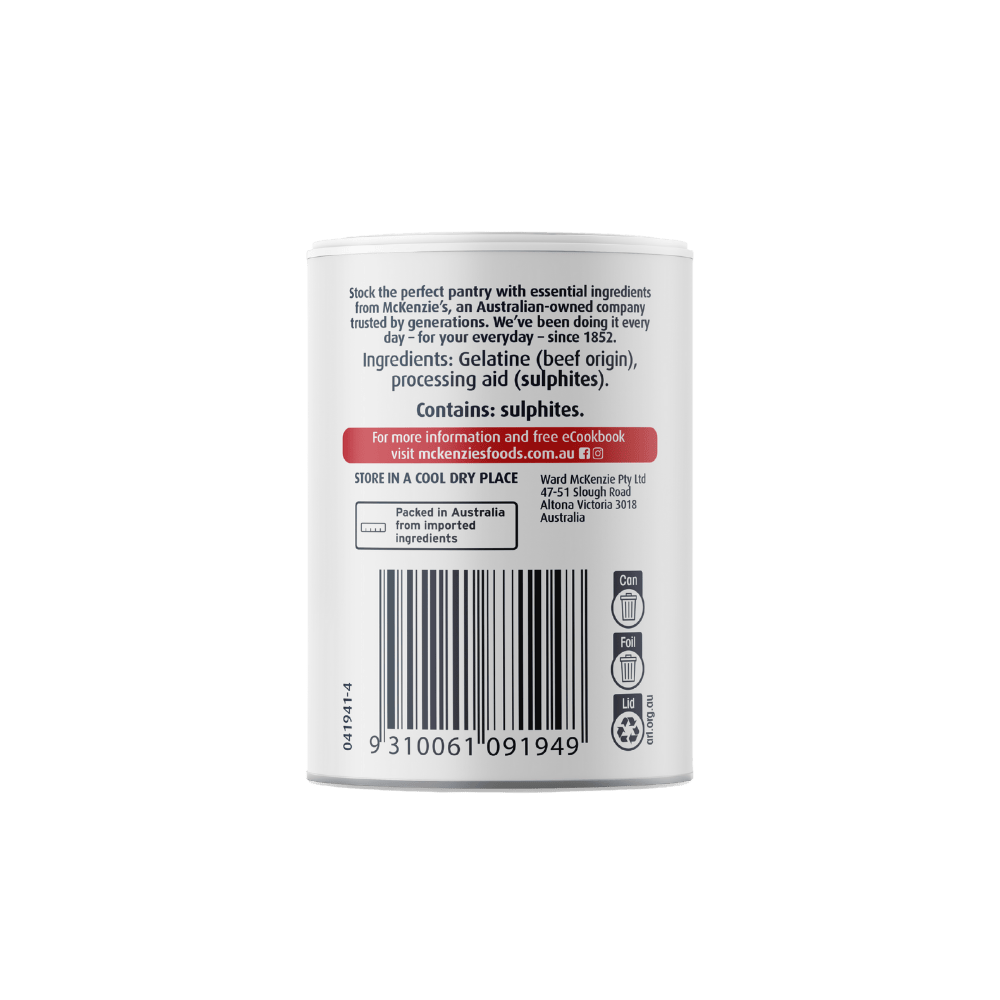
How to Use Gelatine Powder

Follow these steps for smooth, reliable results.

  1. Measure the gelatine powder
    For a soft everyday set, use 2 teaspoons of gelatine powder for 500ml of liquid.
  2. Sprinkle over cold water
    Sprinkle 2 teaspoons of gelatine powder over 2 tablespoons of cold water. Do not tip it in as one pile. Sprinkling helps the powder absorb the water evenly.
  3. Whisk gently with a fork
    Stir lightly so all the powder is moistened.
  4. Let it bloom for 1 minute
    The gelatine will swell and become thick. This step is called blooming, and it helps prevent lumps.
  5. Dissolve gently
    Melt the bloomed gelatine in the microwave in 20-second increments until dissolved. You can also dissolve it gently over low heat. Do not boil it.
  6. Add to your recipe
    Stir the dissolved gelatine into 500ml of cold or warm liquid and mix thoroughly. If you are adding it to a cold mixture such as cream, yoghurt or cheesecake filling, stir a little of the cold mixture into the dissolved gelatine first, then mix that back into the full bowl.
  7. Chill until set
    Refrigerate the mixture until fully set. Soft desserts such as panna cotta may need several hours, while slices and moulded desserts may need longer.

Gelatine Powder Ratios for Different Set Strengths

The amount of gelatine powder you need depends on the texture you want. A soft panna cotta needs less gelatine than a jelly slice that needs to hold its shape when cut.

Liquid Amount Soft Set Firm Set Very Firm Set
250ml 1 tsp gelatine powder 1½ tsp gelatine powder 2 tsp gelatine powder
500ml 2 tsp gelatine powder 3 tsp gelatine powder 4 tsp gelatine powder
750ml 3 tsp gelatine powder 4½ tsp gelatine powder 6 tsp gelatine powder
1 litre 4 tsp gelatine powder 6 tsp gelatine powder 8 tsp gelatine powder
  • Use a soft set for panna cotta, creamy desserts, mousses and delicate jellies.
  • Use a firm set for cheesecake slices, jelly slices and desserts that need to hold their shape.
  • Use a very firm set for moulded jellies, layered slices or recipes that need to be cut cleanly.

How Much Gelatine Powder Sets 500ml of Liquid?

For 500ml of liquid, use 2 teaspoons of gelatine powder for a soft set.

This is the best starting point for everyday Australian desserts such as jelly, panna cotta, creamy puddings and soft-set cheesecake fillings.

If you need the dessert to slice cleanly, increase the amount to 3 teaspoons for a firmer set. For a very firm set, use 4 teaspoons per 500ml.

What Temperature Should Gelatine Be Dissolved At?

Gelatine powder should be bloomed in cold water, then dissolved gently using warm heat.

Cold water allows the granules to hydrate evenly. Once bloomed, the gelatine can be melted in short microwave bursts or over low heat. The mixture should be warm enough to dissolve, but not boiling.

As a kitchen guide, think warm and fluid, not bubbling. Boiling gelatine can weaken its setting power and may affect the final texture.

Gelatine Powder to Gelatine Leaves Conversion Guide

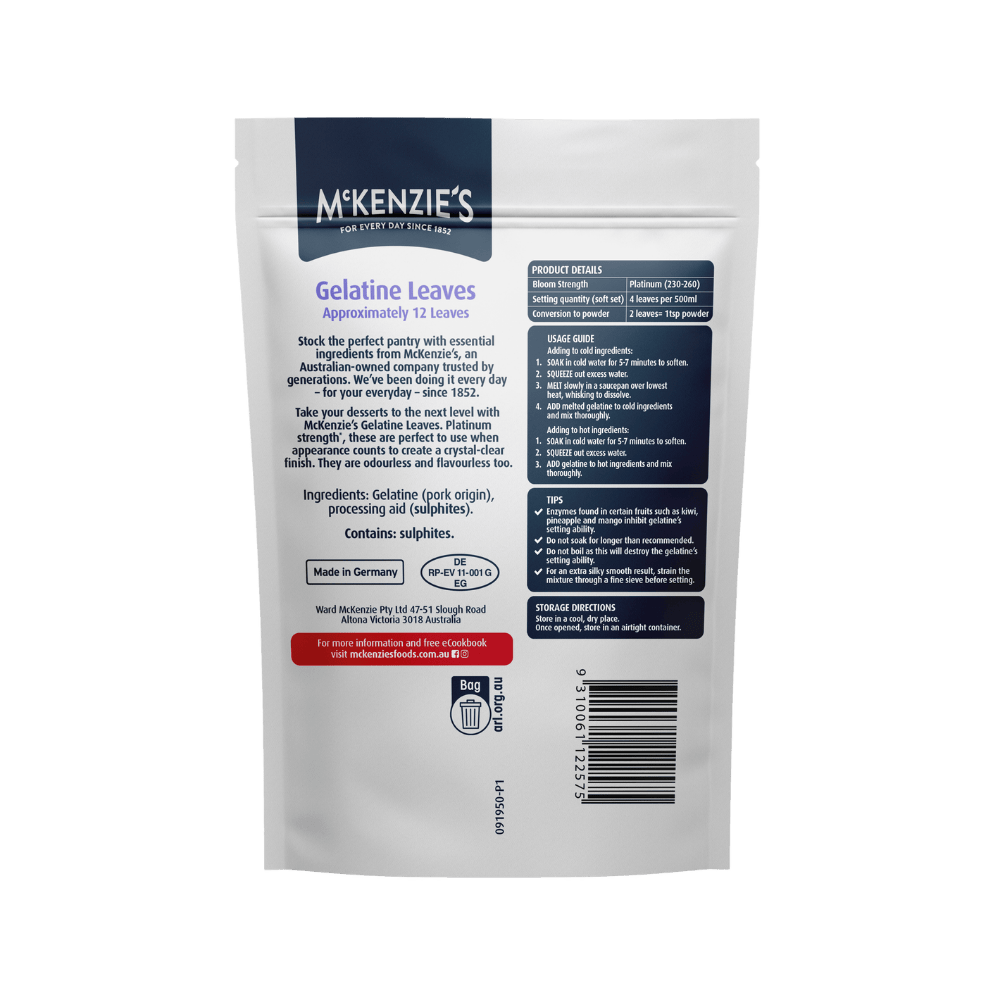
As a guide, 1 teaspoon of McKenzie’s Gelatine Powder equals approximately 2 McKenzie’s Gelatine Leaves.

Use this conversion when swapping between McKenzie’s platinum strength powder and leaves.

Gelatine Powder Platinum Gelatine Leaves Best For
1 tsp 2 leaves 250ml liquid, soft set
2 tsp 4 leaves 500ml liquid, soft set
3 tsp 6 leaves 500ml liquid, firm set
4 tsp 8 leaves 500ml liquid, very firm set
4 tsp 8 leaves 1 litre liquid, soft set
6 tsp 12 leaves 1 litre liquid, firm set
8 tsp 16 leaves 1 litre liquid, very firm set

If you are converting the other way, divide the number of leaves by two.

For example:

  • 2 gelatine leaves = 1 teaspoon gelatine powder
  • 4 gelatine leaves = 2 teaspoons gelatine powder
  • 6 gelatine leaves = 3 teaspoons gelatine powder
  • 8 gelatine leaves = 4 teaspoons gelatine powder

How to Add Gelatine to Cold Mixtures

Cold mixtures need a little extra care.

If you pour warm dissolved gelatine straight into a cold cheesecake filling, cream mixture or yoghurt base, it may seize into little strings or lumps. To avoid this, temper it first.

Stir a spoonful or two of the cold mixture into the dissolved gelatine. Once smooth, pour that loosened gelatine mixture back into the bowl and mix thoroughly.

This is especially helpful for:

  • No-bake cheesecakes
  • Creamy slices
  • Yoghurt-based desserts
  • Mousse
  • Panna cotta-style fillings
  • Whipped cream mixtures

Common Gelatine Powder Mistakes and How to Avoid Them

Adding powder straight into hot liquid

This can create clumps. Always bloom gelatine powder in cold water first.

Boiling the gelatine

Too much heat can weaken gelatine. Dissolve it gently and avoid boiling.

Not using enough gelatine

If a dessert needs to be sliced, use a firm or very firm ratio. A soft set may be too delicate.

Adding gelatine too quickly to a cold mixture

This can cause stringy pieces or lumps. Temper the gelatine first by mixing it with a small amount of the cold mixture before adding it back in.

Using fresh fruits that stop gelatine setting

Some fresh fruits contain enzymes that can interfere with gelatine’s setting ability. These include kiwi fruit, pineapple, papaya, peach, guava and mango. Cooked or canned fruit is usually more reliable in gelatine desserts.

Not allowing enough chilling time

Gelatine needs time to set properly. For best results, chill desserts for several hours or overnight, especially if they are layered, creamy or moulded.

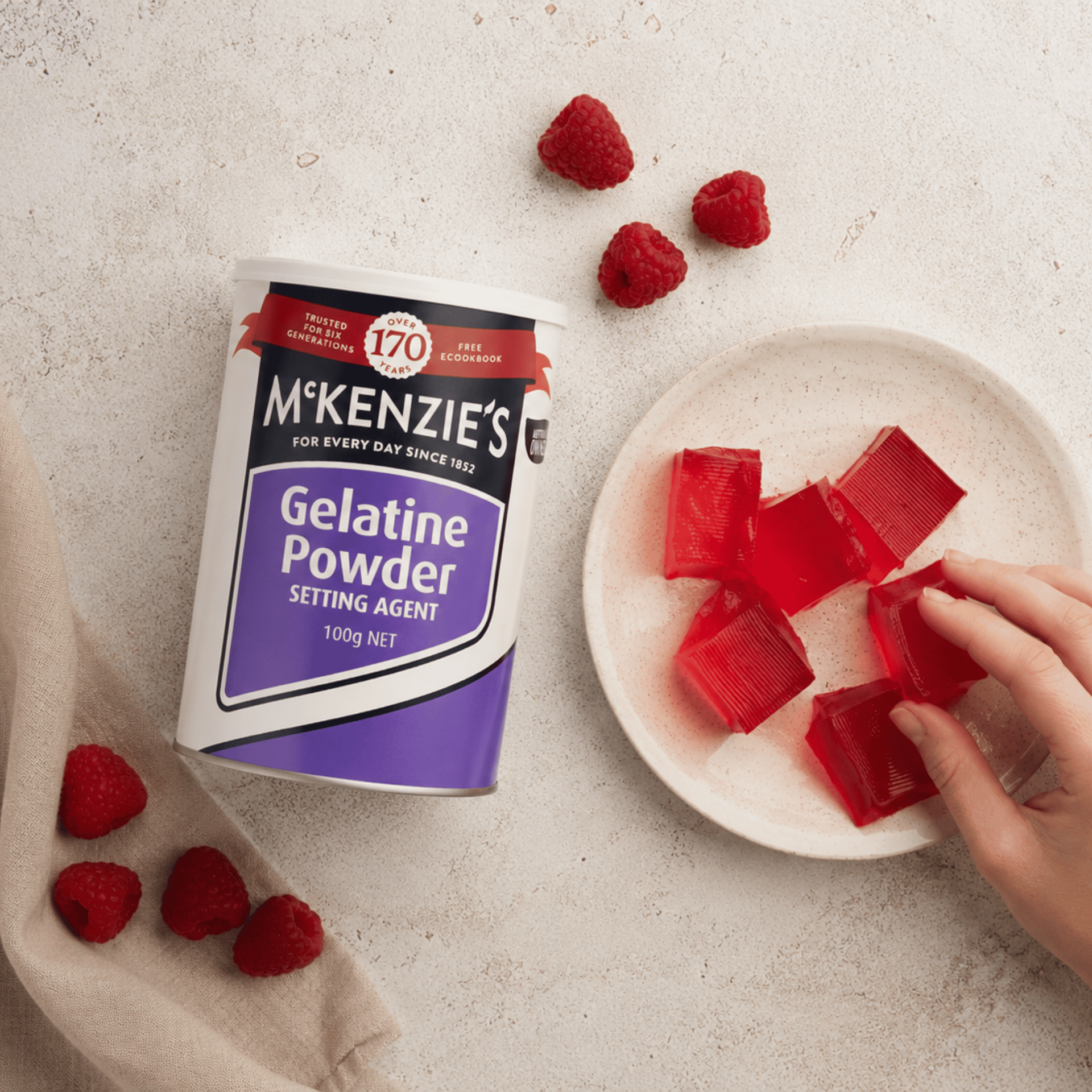
McKenzie’s Gelatine Powder

McKenzie’s Gelatine Powder is a natural setting agent used to turn liquids into gel. It is useful in both sweet and savoury cooking, from fruit jellies and cheesecakes to terrines, glazes and panna cotta.

It is platinum strength, which means it has a strong setting ability. As a guide, 2 teaspoons will set approximately 500ml of liquid.
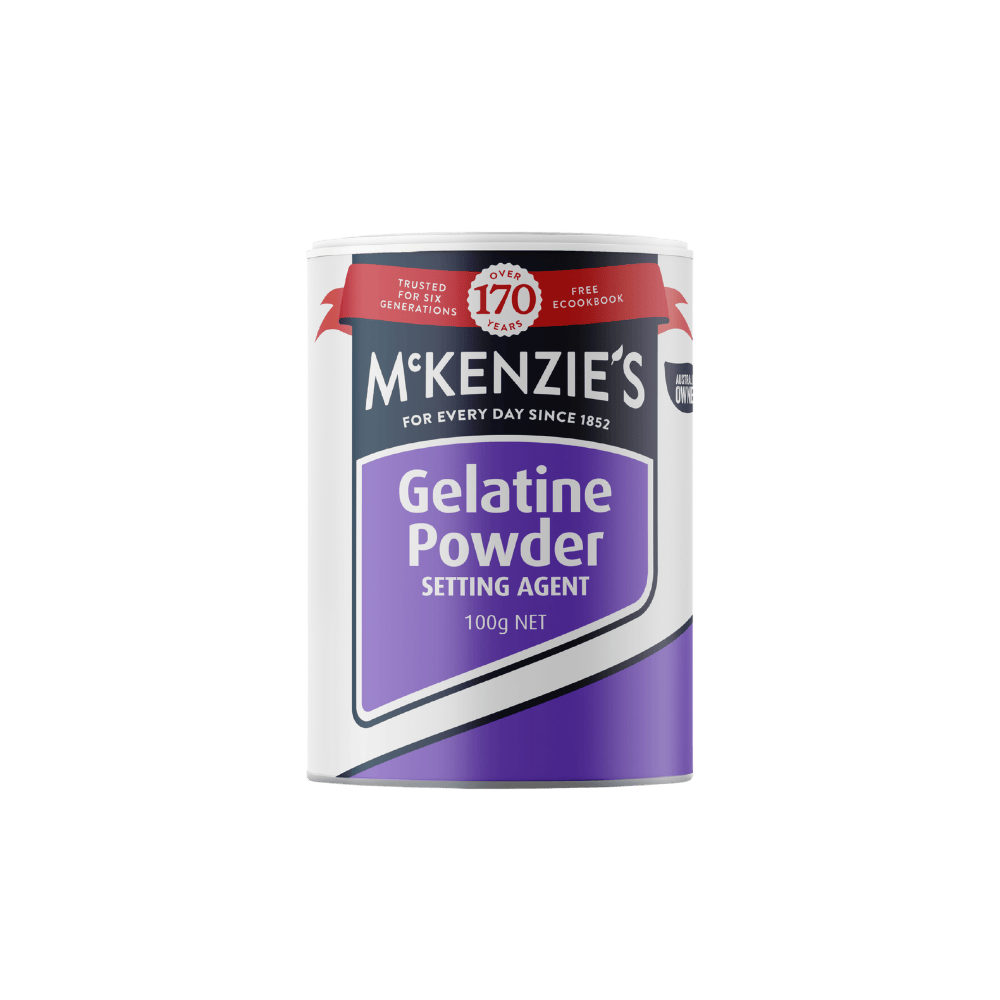
McKenzie’s Gelatine Powder is made from gelatine of beef origin and contains preservative 220. It is not suitable for vegetarians or vegans because gelatine is an animal-derived ingredient.

It is a handy pantry ingredient for:

  • Jelly
  • Cheesecake slices
  • Marshmallows
  • Panna cotta
  • Mousse
  • Creamy desserts
  • Terrines
  • Glazes
  • Savoury jellies

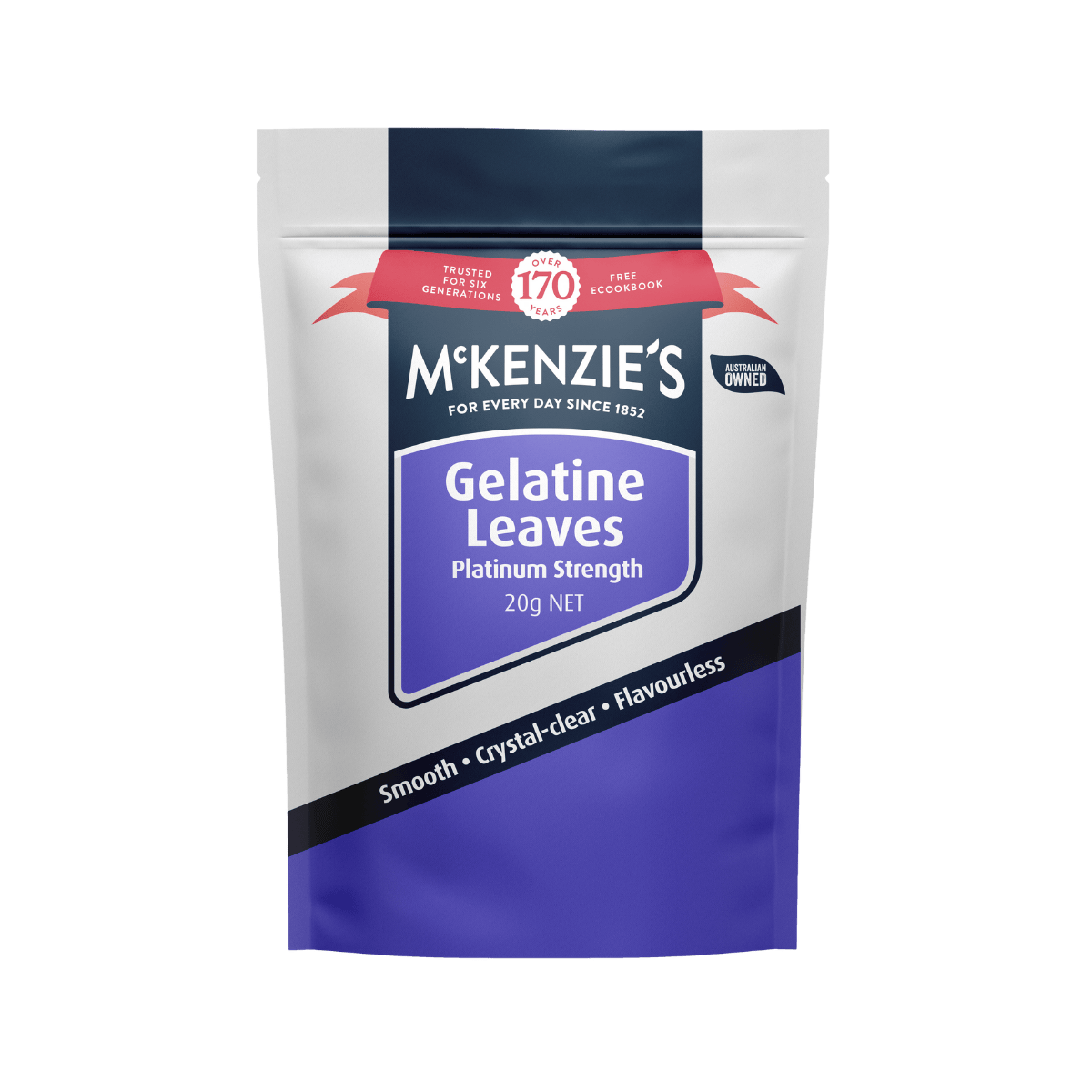
McKenzie’s Gelatine Leaves

McKenzie’s Gelatine Leaves are also platinum strength and are ideal when appearance matters.

Gelatine leaves are often used by cooks who want a very smooth, clear finish. They are odourless and flavourless, and they dissolve cleanly when used correctly.

McKenzie’s Gelatine Leaves are especially useful for:

  • Panna cotta
  • Clear jellies
  • Fruit glazes
  • Mousse
  • Cheesecake fillings
  • Layered desserts
  • Delicate dessert work

To use gelatine leaves, soak them in cold water for 5 to 7 minutes until softened. Squeeze out the excess water, then add the softened leaves to hot liquid and stir until dissolved. If you are adding them to cold ingredients, melt the softened leaves gently over the lowest heat first, then mix thoroughly into the recipe.

What Is Platinum Strength Gelatine?

Platinum strength refers to the Bloom strength of gelatine.

Bloom strength measures how firm the gelatine set will be. The higher the Bloom number, the stronger the setting power. McKenzie’s Gelatine Powder and McKenzie’s Gelatine Leaves are both platinum strength, which means they provide a strong, reliable set when used correctly.

This matters because different gelatine strengths are not always interchangeable. If a recipe specifies platinum gelatine leaves, it is best to use platinum strength leaves or follow a clear conversion guide.

Gelatine Powder to Gelatine Leaves Conversion Guide

As a guide, 1 teaspoon of McKenzie’s Gelatine Powder equals approximately 2 McKenzie’s Gelatine Leaves.

Use this conversion when swapping between McKenzie’s platinum strength powder and leaves.

Gelatine Powder Platinum Gelatine Leaves Best For
1 tsp 2 leaves 250ml liquid, soft set
2 tsp 4 leaves 500ml liquid, soft set
3 tsp 6 leaves 500ml liquid, firm set
4 tsp 8 leaves 500ml liquid, very firm set
4 tsp 8 leaves 1 litre liquid, soft set
6 tsp 12 leaves 1 litre liquid, firm set
8 tsp 16 leaves 1 litre liquid, very firm set

If you are converting the other way, divide the number of leaves by two.

For example:

  • 2 gelatine leaves = 1 teaspoon gelatine powder
  • 4 gelatine leaves = 2 teaspoons gelatine powder
  • 6 gelatine leaves = 3 teaspoons gelatine powder
  • 8 gelatine leaves = 4 teaspoons gelatine powder

Can You Substitute Gelatine Powder for Gelatine Sheets?

Yes. You can substitute gelatine powder for gelatine sheets if you use the correct conversion.

For McKenzie’s platinum strength gelatine, use 1 teaspoon gelatine powder for every 2 gelatine leaves. Bloom the powder in cold water first, then dissolve it gently before adding it to your recipe.

If the recipe calls for 4 gelatine leaves, use 2 teaspoons of gelatine powder. If it calls for 6 gelatine leaves, use 3 teaspoons of gelatine powder.

Can You Re-Melt Gelatine If It Sets Too Firm?

Yes, gelatine can usually be gently re-melted if it sets too firm.

Warm it slowly over low heat or in short microwave bursts until liquid again. Then add a little more liquid to soften the set. Mix thoroughly and chill again. Avoid boiling the mixture, as too much heat can weaken the gelatine.

Why Won’t My Gelatine Set?

Gelatine may not set if you used too little gelatine, added it to boiling liquid, did not bloom it properly or used fresh fruit that interferes with the setting process.

Fresh kiwi fruit, pineapple, papaya, peach, guava and mango can stop gelatine from setting properly. Very acidic liquids, alcohol-heavy mixtures and recipes with a high proportion of cream or sugar can also affect the final texture.

If your mixture is still liquid, gently warm it, add more bloomed and dissolved gelatine, then chill again.

A Simple Guide for Smooth, Reliable Results

Gelatine is one of those ingredients that rewards a little patience. Bloom it in cold water, dissolve it gently and give it time to chill properly. Once you understand the ratios, it becomes much easier to create smooth panna cotta, glossy jellies, neat cheesecake slices and beautiful set desserts with confidence.

For everyday settings, keep McKenzie’s Gelatine Powder in the pantry. When you want a clear, polished finish for delicate desserts, McKenzie’s Gelatine Leaves are a lovely choice.

FAQs

Sprinkle gelatine powder over cold water and let it bloom first. Then dissolve it gently in the microwave or over low heat before adding it to your recipe.

Use 2 teaspoons of gelatine powder to softly set 500ml of liquid. For a firmer set, use 3 teaspoons.

Yes. As a guide, 1 teaspoon of McKenzie’s Gelatine Powder equals approximately 2 McKenzie’s Gelatine Leaves.

Use 2 teaspoons of gelatine powder per 500ml of liquid for a soft set. Increase to 3 teaspoons for a firmer set.

Gelatine may not set if it was not bloomed properly, was boiled, or was used with certain fresh fruits. Pineapple, kiwi fruit, papaya, guava and mango can all affect setting.

Yes. Warm it gently until liquid again, then stir in more liquid to soften the texture. Avoid boiling.

Gelatine itself is naturally gluten-free, but always check the product label if cooking for someone with coeliac disease or gluten intolerance.

Gelatine powder is made from collagen, an animal-derived protein. McKenzie’s Gelatine Powder is of beef origin.

Platinum strength refers to gelatine with a strong Bloom rating, meaning it has a reliable setting power. McKenzie’s Gelatine Powder and Gelatine Leaves are both platinum strength.

Gelatine powder is bloomed in cold water before dissolving. Gelatine leaves are soaked, squeezed and dissolved. Leaves are often used when a clear, smooth finish is wanted.

As a guide, 2 McKenzie’s Gelatine Leaves equal 1 teaspoon of McKenzie’s Gelatine Powder.

Find us on social media